
On Saturday, October 17th, a Mass at Our Lady of Perpetual Help Church in Guayaquil, Ecuador, became a tragedy witnessed in real time.
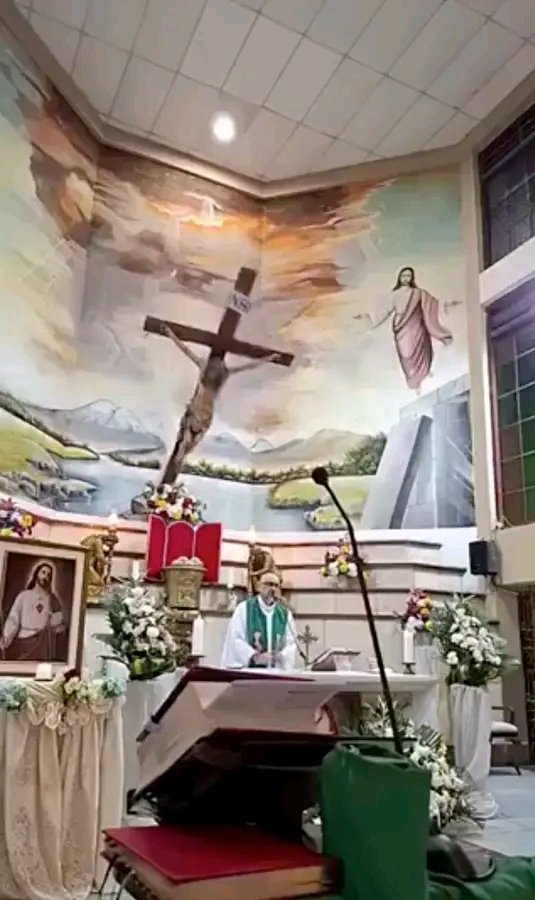
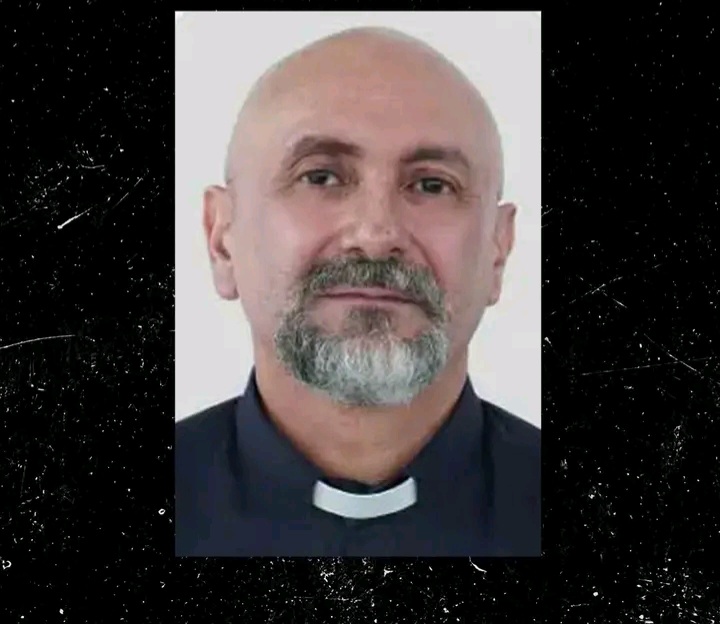
Father Patricio Alfredo Sánchez Molinari, a Redemptorist priest and parish priest of the Central Vicariate, was 27 minutes into a livestreamed service when the large wooden crucifix mounted behind the altar detached from the wall and fell onto him. Worshippers screamed for an ambulance.
The livestream kept running. The Archdiocese of Guayaquil confirmed the next day that he had died from his injuries.
What makes the moment haunt people even more is what he had just said. In his homily, Father Sánchez had been reflecting on the fleeting nature of life, warning his congregation not to waste their lives scrolling on their phones but to dedicate their time to God and family.
“One day, all of us here will also die, and sometimes the time we’ve spent on things doesn’t have as much meaning as the time we spend with God,” he told them, minutes before the cross fell.
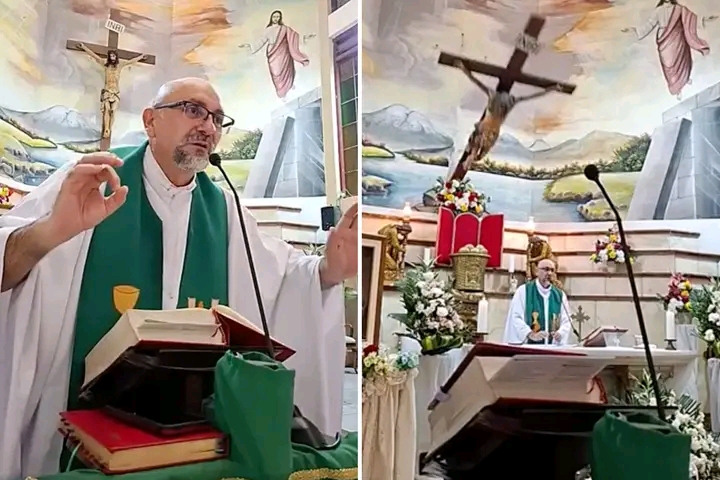
For Catholics in Ecuador and beyond, the Archdiocese’s statement framed his death in the language of faith: that he had “departed for the Father’s House to rejoice in His presence and glory”. It was grief, not interpretation.
And that is where a difficult, uncomfortable question arises.
If this exact same freak accident a towering religious symbol collapsing and killing a leader during a live service had happened to a pastor of a fringe movement, to a prosperity gospel preacher known for excess, or to a self-proclaimed prophet outside the mainstream faith, the internet would have been merciless.
Many would have called it immediate divine judgment. “A sign from God.” “You can’t make this up.” The comments would write themselves. The video would be shared not with prayers, but with vindication.
Why do we have two different vocabularies for the same type of event?
Psychologists call it motivated attribution. When tragedy strikes someone we revere, we reach for explanations that preserve meaning: it was an accident, a structural failure, a profound coincidence that even echoes his final sermon about the spontaneity of death.
We look for faulty mountings or aging wood. We emphasize his life of service in the Congregation of the Most Holy Redeemer, an order founded in 1732 that now serves in 80 countries. 0fb23e1d
When tragedy strikes someone we distrust or dislike, we reach for moral narrative. The event becomes proof. It confirms what we already believed about them. A fallen cross becomes a fallen ministry.
Both reactions are deeply human. Humans are not good at living with randomness. A heavy object fell because gravity and hardware failed.
That is a terrifyingly empty explanation. So we fill it. Faith fills it with providence and eternal rest. Skepticism fills it with irony and judgment. Cynicism fills it with cosmic punchlines.
The Catholic tradition itself has a long, complicated relationship with this impulse. For centuries, believers have read extraordinary events as signs, while the Church’s own theologians have warned precisely against reading every accident as divine commentary.
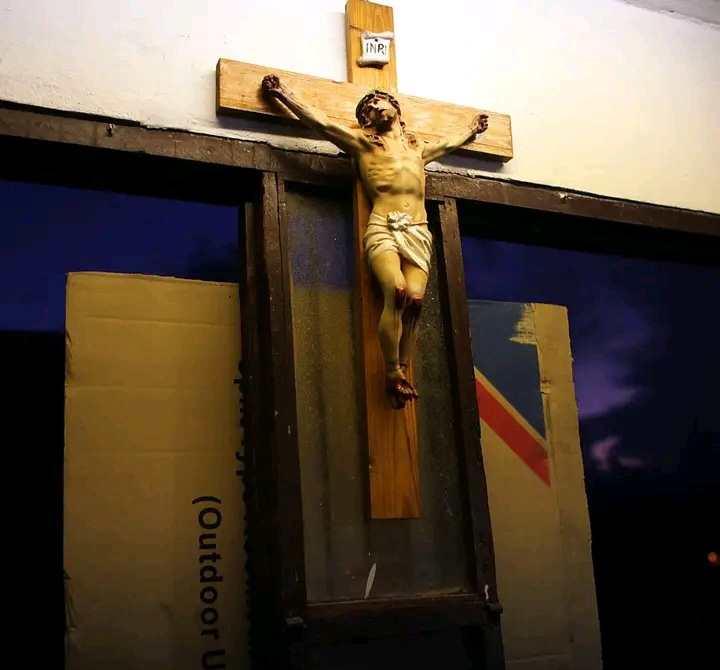
Not every falling crucifix is a message. Sometimes, a church is just an old building in a humid coastal city where wood swells and nails loosen.
Father Sánchez’s own final words point to a more honest way to hold this. He wasn’t preaching about signs and wonders. He was preaching about time how we spend it, who we give it to. “The quality time we give to God, to our brothers and sisters, to our husbands, wives, children, and family that time is the best spent,” he said. 3e1d
That sermon remains true whether his death is seen as a tragedy, a mystery, or a terrible accident. It doesn’t require a supernatural explanation to have weight.
If we would extend grace, nuance, and the benefit of “it was just a terrible accident” to a priest we respect, we should be willing to extend that same restraint to those outside our faith.
And if we are tempted to call someone else’s tragedy a sign from God, we should ask whether we would say the same if the cross had fallen on our own pastor, our own father, our own church.
In Guayaquil, a community lost a pastor who showed up every week and streamed his Masses for those who couldn’t attend.
The most faithful response to his death is not to turn it into a parable about divine wrath for other people, but to take his last admonition seriously: life is short and unpredictable, and we do not know how much time we have.
The cross fell. A man died. That is enough tragedy without needing it to mean something more.


