
For more than five years, the R370 Social Relief of Distress grant has been the most controversial, most extended, and most depended-upon social grant in South Africa’s history.
It was supposed to last six months.
Now, the government is finally admitting what everyone already knew: the SRD cannot be extended forever. And what replaces it will be much bigger than R370.
The Department of Social Development has confirmed it is drafting a new Basic Income Support grant a permanent, structured grant designed to replace the SRD and form a new pillar of South Africa’s social assistance system.
From Emergency Measure to Lifeline For 8 Million People
When President Cyril Ramaphosa announced the SRD grant in 2020, South Africa was in hard lockdown. Streets were empty, businesses were closed, and millions of informal workers who had no UIF, no savings and no formal employer had no income at all.
The plan was simple: R350 a month for six months to keep people from starving.
Six months became a year. A year became three years. Three years became five.
Today, according to National Treasury, more than 8.2 million South Africans receive the SRD grant every month. In the 2026 Budget, government had to find an additional R36.4 billion just to keep it running until 31 March 2027.
For many recipients, R370 it was increased from R350 in 2024 is not enough to live on. But research by the Department of Social Development and studies by UJ and Wits shows it is enough to make a difference.
The department found that the majority of recipients spend it on maize meal, bread, electricity, airtime and school clothing. It also disproved the myth that the grant makes people lazy to look for work recipients were actually more likely to keep job hunting because they could afford transport to interviews and data to apply online.
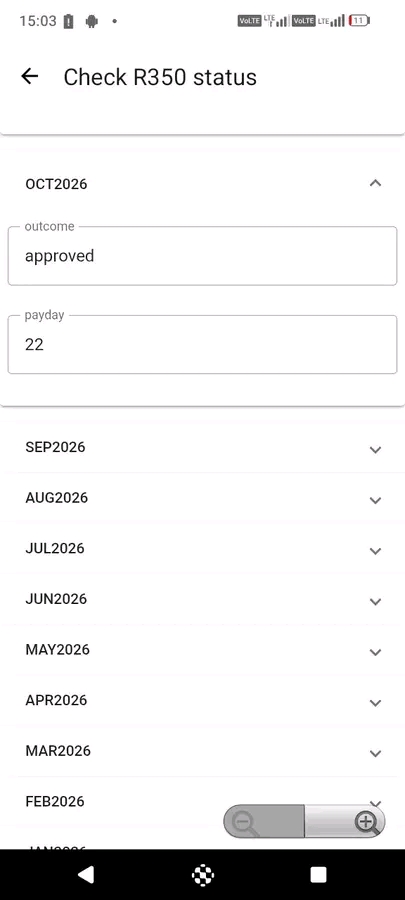
But as an emergency tool, it was deeply flawed. Every year, SASSA had to re-verify millions of bank accounts. Payment dates shifted. Appeals flooded the system. Fraud was rife. And because it was never written into the Social Assistance Act as a permanent grant, it had to be politically extended every single February.
Government now wants to end that cycle.
What Is the Basic Income Support Grant?
According to a report by BusinessTech published on 17 June 2026, the Department of Social Development has presented a clear roadmap for the new grant to Cabinet.
The department’s goal is to finalise the policy by March 2027, so that the legislative process can begin in the 2027/28 financial year. That timeline is not accidental the current extension of the SRD ends on 31 March 2027. The plan is for the new grant to take over immediately after.
President Ramaphosa gave the plan political backing in his 2026 State of the Nation Address, where he promised that the rework of the SRD into a more sustainable income support system would happen this year.
So how will it be different from the R370 we know?
1. It will be permanent, not temporary.
Unlike SRD, which is funded as a temporary disaster relief line item, Basic Income Support will require an amendment to the Social Assistance Act. That makes it a permanent grant like the child support grant or old age grant.
2. It will be linked to work.
This is the biggest change. The department has admitted that the first draft of the policy, which went to Cabinet in November 2024, was sent back because it was too weak on this point. Cabinet wanted more than just a handout.
The revised version, completed with new research in February 2026, now includes what the department calls “employment and livelihood linkages.”
In practice, this means recipients will not just be paid they will be registered on a system that connects them to EPWP opportunities, public employment programmes, skills training, and job placement through the Department of Employment and Labour.
The idea is to make it a stepping stone, not a dead end.
3. It will likely pay more, but to fewer people or the same people with stricter criteria.
The department has not confirmed the new amount. But economists have been clear: R370 is below the food poverty line, which is now over R760 per person per month. You cannot claim to provide “basic income support” if the amount doesn’t buy basic food.
Any increase, however, comes with a massive price tag. At R370, 8 million people cost about R35 billion a year. At R760, the same number would cost over R70 billion. That is why Treasury is involved in every step of the drafting.
According to the timeline, engagements between Social Development and National Treasury are set to conclude by July 2026. After that, an updated draft policy and a socio-economic impact assessment will be sent to the Presidency.
Cabinet will then be asked to approve the draft for public comment in August 2026. That will be the first time South Africans will see the proposed amount, the qualifying criteria age, income threshold, employment status and the conditions attached.
After public comments, a final version will go back to Cabinet for approval in March 2027.
Why It Matters Now
The timing is political and economic.
Unemployment in South Africa remains above 32%, with youth unemployment above 59%. The official old age, disability and child grants cover people who cannot work. But there has never been a grant for able-bodied adults aged 18 to 59 who simply cannot find work.
The SRD accidentally became that grant. The Basic Income Support grant would officially create it a first in South African history.
For the ANC government, it fulfils a long-standing promise to its alliance partners, COSATU and the SACP, who have demanded a Basic Income Grant for over a decade. For Treasury, it is a nightmare to fund unless economic growth returns.
And for the 8 million people who wake up at the start of every month to check if SASSA has paid R370, it is everything.
 Will they qualify for the new grant? Will the amount finally increase? Will they be forced to take a low-paying government work programme or lose it?
Those questions will only be answered when the draft policy is published for public comment in August.
What is certain is this: the era of the temporary R370 SRD grant is coming to an end. After six years of extensions, South Africa is about to decide whether it can afford and whether it wants to pay a basic income to its poorest adults, permanently.
That debate, when it opens in August, will be one of the most important economic debates of the next decade.